
Finding the best way how to organize deep kitchen cabinets can feel overwhelming, but it does not have to be. This guide shares simple, proven strategies to unlock extra storage and make every inch count. You will learn about organizers, step-by-step plans, and expert tips that actually work.
Deep kitchen cabinets are a blessing and a curse. They offer plenty of room, but getting to what is tucked in the back can feel like a treasure hunt. Many homeowners stuff these cabinets full and forget what is hiding behind the boxes and cans. The result is wasted space, duplicate purchases, and frustration every time you open a door.
If you have ever wondered how to organize deep kitchen cabinets, you are in the right place. This guide walks you through every step with clear, practical advice. You will discover organizers that fit, strategies that stick, and tips that save time every single day. By the end, you will know exactly how to turn those deep cabinets into your kitchen’s best storage asset.
The good news is that you do not need expensive custom cabinets or a major renovation. A few smart organizers and a simple plan can make a huge difference. Let us dive in and make your kitchen cabinets work harder for you.
Key Takeaways
- Measure first: Knowing your cabinet depth and interior dimensions helps you choose the right organizers.
- Pull-out shelves are a game-changer: They eliminate the need to reach deep into dark cabinets.
- Group items by frequency of use: Keep everyday items at eye level and rarely used items on the top shelves.
- Avoid overstuffing: Cramming too much into deep cabinets leads to clutter and wasted space.
- Use tiered risers and baskets: These small tools create visible layers and maximize vertical space.
- Label everything: Labels help everyone in the household find items quickly and put them back in place.
- Start with decluttering: Organizing works best when you remove items you no longer need first.
📑 Table of Contents
Why Deep Kitchen Cabinets Are So Hard to Use
Deep kitchen cabinets are common in many homes, especially in newer builds. They typically measure between 24 and 30 inches from front to back. That depth is great for storing large items like pots and pans. But it becomes a problem when you cannot see or reach what is in the back.
Most people push items to the front and forget about what sits behind them. Over time, expired food, broken gadgets, and unused gadgets pile up in the shadows. This is one of the biggest reasons kitchen cabinet organizers are so popular. They solve the access problem and make every inch of cabinet depth useful.
The Access Problem
When a cabinet is deep, items in the back get buried. You have to reach past everything in front to grab what you need. This leads to a few common headaches:
- Items get lost or forgotten. You buy duplicates because you cannot find the original.
- Food goes bad in the back. Cans and boxes sit unseen past their prime.
- You avoid using the cabinet. Over time, the deep cabinet becomes a dumping ground rather than useful storage.
- Everything feels cluttered. Even if the cabinet is not full, it feels chaotic because you cannot see what is inside.
The fix is not to buy a bigger kitchen. It is to use the space you already have more wisely. That is where how to organize deep kitchen cabinets really comes into play.
Why Most People Waste This Space
There is a simple reason deep cabinets become disorganized. People do not have a system. They toss things in and close the door. Without a plan, the back of the cabinet becomes a black hole. Items go in but never come back out.
Another reason is that standard shelves do not work well in deep cabinets. A single flat shelf leaves a large dead zone behind it. You can only access the front portion easily. The rest of the space stays hidden and unused. This is why extra storage solutions like pull-out shelves and tiered risers are so effective. They bring the back of the cabinet to the front.
How to Assess Your Deep Cabinet Space
Before you buy any organizers, take a step back and look at what you are working with. Assessing your cabinets first saves time and money. You will know exactly what fits and what you actually need.
Measure Your Cabinet Dimensions
Grab a tape measure and check the following for each deep cabinet:
- Interior width: Measure from side to side.
- Interior depth: Measure from the front edge of the shelf to the back wall.
- Interior height: Measure from the bottom to the top, noting any dividers or shelves already in place.
- Shelf thickness: Check if the existing shelves are fixed or adjustable.
Write these measurements down. When you shop for kitchen cabinet organizers, you will need these numbers. A deep shelf organizer that is too wide or too narrow will not fit properly. Getting the measurements right is the first step in how to organize deep kitchen cabinets the right way.
Take Stock of What Is Inside
Now it is time to empty everything out. Yes, everything. Pull out all the shelves if possible, and remove every item from the cabinet. This is the honest moment where you see exactly what you have.
As you pull things out, sort them into three piles:
- Keep: Items you use regularly and are in good condition.
- Donate or discard: Items you no longer need, expired food, broken gadgets, or duplicates.
- Relocate: Items that belong somewhere else in the house.
This kitchen decluttering step is essential. You cannot organize what you do not need. Most people are surprised by how much they find hidden in the back of deep cabinets. Getting rid of the excess makes the whole process much easier.
Best Organizers for Deep Kitchen Cabinets
Once you know your cabinet dimensions and have decluttered, it is time to choose the right organizers. The best organizer depends on what you store and how deep your cabinets are. Here are the top options that work well for deep cabinets.
Pull-Out Shelves and Drawers
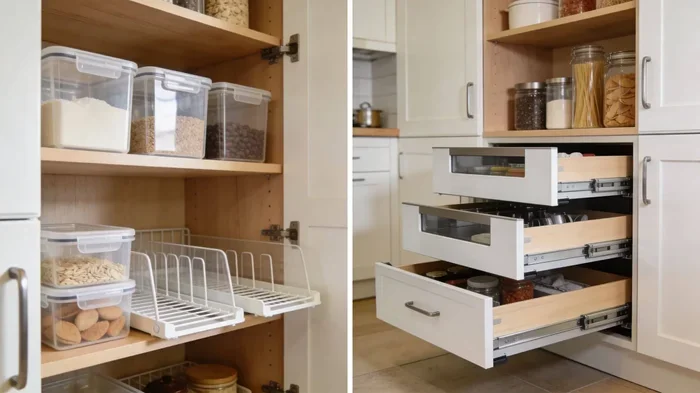
Pull-out shelves are one of the most effective solutions for deep cabinets. They slide out on rollers or tracks, giving you full access to the back without reaching. You can find pull-out shelves in different depths to match your cabinets.
Benefits of pull-out shelves:
- You can see everything at a glance.
- No more digging through stacks of items.
- They work well for pots, pans, and bulk items.
- Installation is usually simple and does not require permanent changes.
If your cabinet depth is 24 inches or more, a full-extension pull-out shelf is ideal. For shallower deep cabinets, a half-pull drawer can still make a big difference. These organizers are a top choice for anyone learning how to organize deep kitchen cabinets for extra storage.
Tiered Shelf Risers and Inserts
Tiered shelf inserts are angled platforms that stack on top of each other. They create multiple levels inside a single cabinet shelf. This means you can see every item on each tier instead of stacking things on top of each other.
These risers work great for:
- Canned goods and jars
- Spices and small bottles
- Snack packages and cereal boxes
- Plastic wrap, foil, and baggies
A cabinet riser made of metal or bamboo is durable and easy to clean. Look for ones that are deep enough to fit your cabinet measurements. Tiered organizers are a simple but powerful way to add extra storage without adding more cabinet space.
Lazy Susans and Spinners
A lazy Susan is a rotating tray that sits inside a cabinet. You place items on it and spin the tray to reach whatever you need. This is especially useful for corner cabinets or deep cabinets where items in the back are hard to reach.
Why lazy Susans work so well:
- They make every item accessible from the front.
- They use the full depth and width of the cabinet.
- They are great for storing spices, oils, and condiments.
- They come in round, square, and rectangular shapes.
For deep cabinets, consider a full-size lazy Susan rather than a small spice version. A larger lazy Susan can hold a surprising amount of items and keeps everything visible. It is one of the easiest pantry organization upgrades you can make.
Under-Shelf Baskets and Hooks
Under-shelf baskets clip or hang from the existing shelf above them. They use the vertical space above your current shelf level. This is a clever way to add storage without taking up shelf space.
These baskets are perfect for:
- Small snack bags and granola bars
- Plastic wrap and aluminum foil rolls
- Spice packets and tea bags
- Small kitchen tools and utensils
Look for baskets that are the right width for your cabinet. Under-shelf organizers are affordable and easy to install. They are a great addition to any how to organize deep kitchen cabinets plan because they maximize every inch of vertical space.
Stackable Storage Containers
For dry goods like pasta, rice, cereal, and flour, stackable containers are a must. They replace bulky boxes and bags with uniform, stackable bins. You can see what is inside each container, and they stack neatly on top of each other.
Tips for using stackable containers:
- Choose clear containers so you can see contents easily.
- Use uniform sizes for neat stacking.
- Label each container with the item name and date opened.
- Place heavier items on the bottom and lighter ones on top.
Stackable containers are a staple of kitchen storage ideas that actually work. They keep deep cabinets tidy and make it easy to grab what you need without making a mess.
Step-by-Step Guide to Organize Deep Kitchen Cabinets
Now that you have your organizers and your decluttered cabinet, it is time to put everything together. This step-by-step process ensures your deep kitchen cabinets stay organized for the long haul.
Step 1: Empty and Clean
Start with completely empty cabinets. Remove all shelves if possible. Wipe down the interior with a mild cleaner. Check for any signs of moisture or pests. A clean cabinet gives you a fresh start and helps your organizers last longer.
While the cabinet is empty, check the condition of the existing shelves. If they are damaged or wobbly, consider replacing them with sturdy adjustable shelves. A solid foundation makes all the difference.
Step 2: Sort and Declutter
We covered this in the assessment section, but it bears repeating. Go through every item you removed. Be honest about what you use and what you do not. Donate items you have not touched in six months or more. Throw away anything expired or broken.
This step is the heart of kitchen decluttering. The less you keep, the easier it is to organize. A lean cabinet is a functional cabinet.
Step 3: Group Like Items Together
Before placing anything back, group your items into categories. Common groupings include:
- Baking supplies: flour, sugar, baking soda, cake mixes
- Canned goods: soups, vegetables, beans, fruits
- Snacks: chips, crackers, granola bars, nuts
- Cooking oils and condiments: olive oil, soy sauce, vinegar
- Small kitchen gadgets: timers, peelers, bottle openers
Grouping items makes it easy to find what you need. It also helps you plan where each group should go inside the cabinet. Items you use most often should be in the most accessible spot.
Step 4: Choose and Install Your Organizers
Now match your organizers to each group. Here is a quick guide:
- Pull-out shelves: Great for heavy items like pots, pans, and large canned goods.
- Tiered risers: Perfect for canned goods, jars, and snacks.
- Lazy Susans: Ideal for oils, spices, and condiments.
- Under-shelf baskets: Best for small items like snack packs and sachets.
- Stackable containers: Use for dry goods like pasta, rice, and cereal.
Install everything according to the manufacturer instructions. Make sure all shelves and drawers slide smoothly and sit level. A little effort here pays off in daily convenience.
Step 5: Load, Label, and Maintain
Place your grouped items back into the cabinet using your organizer layout. Put frequently used items at eye level or in the easiest-to-reach spot. Store rarely used items on higher or lower shelves.
Add labels to containers and baskets. A simple label maker or even masking tape and a marker works. Labels help everyone in the household know where things belong. They also make it easy to maintain the system over time.
Maintenance tip: Set a reminder every few months to check your cabinets. Remove anything that has expired or is no longer needed. A quick five-minute check keeps your pantry organization system running smoothly.
Common Mistakes People Make with Deep Cabinets
Even with the best intentions, mistakes happen when organizing deep cabinets. Here are the most common ones and how to avoid them.
Buying Organizers Without Measuring
The number one mistake is buying organizers without measuring first. A deep shelf organizer that is too wide will not fit. One that is too narrow wastes precious space. Always measure your cabinet interior before purchasing anything.
Overstuffing the Cabinets
It is tempting to fill every inch of cabinet space. But overstuffing leads to clutter and makes it hard to find things. Leave some breathing room. A cabinet that is 80% full works better than one packed to the brim.
Ignoring the Back of the Cabinet
If you do not use pull-out shelves or a lazy Susan, the back of the cabinet stays inaccessible. Items placed there are essentially lost. Always ensure you can reach every part of your deep kitchen cabinets without moving other items.
Forgetting to Label
Even the best organizing system falls apart without labels. Family members may not know where items belong. Labels remove the guesswork and keep the system running. It takes two minutes to label and saves hours of frustration over time.
Skipping the Decluttering Step
Organizing items you do not need is a waste of effort. Always declutter first. If you skip this step, you are just rearranging clutter. A good kitchen decluttering session before organizing makes everything else easier and more effective.
Expert Tips to Keep Cabinets Organized Long-Term
Organizing is one thing. Keeping it organized is another. These expert tips help your system last.
Use the Front-to-Back Rule
Always place newer items behind older ones. This ensures you use the older items first and nothing gets lost in the back. This simple habit keeps your pantry organization fresh and prevents food waste.
Add Cabinet Liners
Cabinet liners protect shelves from spills, crumbs, and scratches. They are easy to cut to size and slip right in. A clean cabinet interior makes it more enjoyable to keep things organized.
Rotate Seasonal Items
Store holiday-specific or seasonal items in a separate cabinet or bin. Bring them out only when needed. This frees up prime cabinet space for everyday items and keeps your deep kitchen cabinets feeling fresh.
Keep a Running Shopping List
When you notice you are running low on something, add it to a list on the fridge. This prevents impulse buying and duplicate purchases. Fewer duplicates mean less clutter in your cabinets.
Involve the Whole Household
Make sure everyone in the family knows where things are stored. A quick walkthrough and a few labels go a long way. When everyone participates in how to organize deep kitchen cabinets, the system stays intact.
Reassess Every Season
Take a few minutes each season to reassess your cabinet setup. Are the organizers still working? Is anything out of place? A quick seasonal check keeps your kitchen storage ideas sharp and effective. Small adjustments prevent big messes down the road.
Conclusion
How to organize deep kitchen cabinets does not have to be complicated or expensive. With the right approach, you can turn those deep, hard-to-reach cabinets into your kitchen’s most valuable storage space. Start by measuring your cabinets and decluttering what you do not need. Then choose organizers that fit your space and your lifestyle. Pull-out shelves, tiered risers, lazy Susans, and stackable containers all play a role in a well-organized kitchen.
Remember to group like items together, label everything, and maintain your system with regular check-ins. Avoid common mistakes like overstuffing and skipping the decluttering step. With a little effort and the right tools, your deep kitchen cabinets will feel open, accessible, and easy to use every single day.
Start today. Pick one cabinet, follow the steps in this guide, and enjoy the satisfaction of a well-organized kitchen. Once you see the results, you will want to tackle every cabinet in the house.
Frequently Asked Questions
What is the best organizer for deep kitchen cabinets?
Pull-out shelves are widely considered the best organizer for deep kitchen cabinets. They give you full access to the back of the cabinet without reaching. Tiered shelf risers and lazy Susans are also excellent choices depending on what you store. The right organizer depends on your cabinet depth and what items you need to store.
How deep should kitchen cabinets be for organizers to work well?
Most standard deep kitchen cabinets measure between 24 and 30 inches from front to back. Organizers like pull-out shelves and lazy Susans work best in cabinets that are at least 24 inches deep. Always measure your specific cabinets before buying any organizer to ensure a proper fit.
Can I organize deep cabinets without buying new organizers?
Yes, you can. Start by decluttering and grouping like items together. Use the existing shelves more strategically by placing frequently used items at the front and rarely used items in the back. Adding simple under-shelf baskets or repurposing shoeboxes as dividers can also help without spending extra money.
How often should I reorganize my deep kitchen cabinets?
A good rule is to reassess your cabinets every season or at least twice a year. This gives you a chance to remove expired items, adjust your layout, and make sure everything is still working well. Quick monthly check-ins also help keep the system running smoothly.
What items should go in the back of deep cabinets?
Place items you rarely use in the back of deep cabinets. This includes specialty bakeware, seasonal serving dishes, and backup supplies. Always use pull-out shelves or lazy Susans for these items so they remain accessible. The front of the cabinet should hold everyday items you use frequently.
Are lazy Susans worth it for deep kitchen cabinets?
Yes, lazy Susans are worth it for deep cabinets. They make every item on the tray accessible by simply spinning it. They are especially useful for storing spices, oils, condiments, and small pantry items. A full-size lazy Susan can hold a surprising amount and eliminates the need to dig through stacks of items.