
Dealing with ants in your kitchen? You are not alone. This guide shares proven, practical tricks to repel ants in kitchen spaces using natural remedies, DIY sprays, and smart prevention habits. You will learn exactly what attracts ants, how to eliminate them fast, and how to stop them from coming back.
Ants in the kitchen are one of the most frustrating problems homeowners face. These tiny invaders show up uninvited, march across your countertops, and make meal prep feel impossible. If you have ever wondered how to repel ants in kitchen spaces for good, you are in the right place.
This guide covers every proven method you need. From simple cleaning habits to powerful natural repellents, we break it all down. You will also learn why ants invade kitchens in the first place and how to prevent them from returning. No harsh chemicals. No expensive exterminators. Just real, actionable advice that works.
Ants are smart. They follow trails, squeeze through tiny gaps, and hunt for food relentlessly. But here is the good news: with the right approach, you can make your kitchen completely unappealing to them. Let us dive into the tricks that actually get results.
Key Takeaways
- Cleanliness is key: Wiping surfaces and storing food properly removes what draws ants into your kitchen.
- Natural repellents work great: Vinegar, peppermint oil, and lemon juice are safe and effective ant deterrents.
- Seal entry points: Caulking cracks and gaps stops ants before they ever reach your counters.
- DIY ant sprays are cheap and easy: You can make powerful repellent sprays with items already in your pantry.
- Prevention beats treatment: Long-term habits keep ants away far better than one-time fixes.
- Food storage matters: Even items like a leftover egg in a bagel hole can attract ants if left uncovered.
📑 Table of Contents
- Why Ants Invade Your Kitchen
- Natural Ways to Repel Ants in Kitchen
- DIY Ant Repellent Sprays You Can Make Today
- How to Prevent Ants from Coming Back
- When to Call a Professional
- Quick Tips for Immediate Relief
- Common Mistakes People Make When Dealing with Kitchen Ants
- Final Thoughts on Repelling Ants in Your Kitchen
Why Ants Invade Your Kitchen
Understanding why ants enter your kitchen is the first step to stopping them. Ants are not random visitors. They are searching for three things: food, water, and shelter. Your kitchen offers all three in abundance.
What Attracts Ants to Kitchens
Ants are especially drawn to sugary and greasy foods. Crumbs on the counter, spilled honey, unsealed snacks, and even pet food bowls create a buffet for these tiny pests. But it is not just about food scraps. A single drop of syrup or a sticky spot on your counter can send out a signal that draws an entire colony.
Here are the top kitchen attractants for ants:
- Sugar and sweet spills — even tiny amounts attract ants fast
- Greasy residue — fries, oils, and butter left on surfaces
- Unsealed food containers — pantry items left open overnight
- Standing water — leaks under sinks or wet sponges
- Pet food bowls — left out with leftover kibble or wet food
- Fruit bowls — ripe or overripe fruit on the counter
Interestingly, even foods you might not think of as ant magnets can cause problems. For example, if you prepare breakfast and leave behind something like an egg in a bagel hole on the counter, the residue and warmth can draw ants in surprisingly fast. Always clean up food items promptly, even small ones.
How Ants Find Your Kitchen
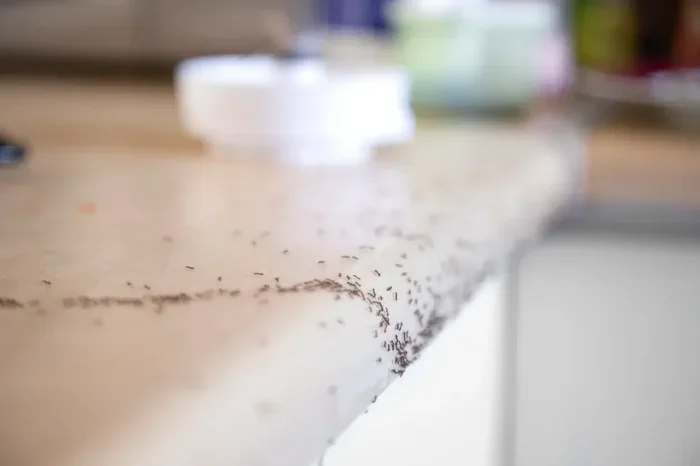
Ants leave scent trails for other ants to follow. When one scout finds food, it marks a path back to the colony. Soon, dozens or even hundreds of ants are following that trail straight to your kitchen. These trails are nearly invisible to us but powerful to ants.
Ants can enter through the smallest openings. A crack in the wall, a gap around a window, a tiny hole near pipes — all of these become highways for ants. This is why sealing entry points is so important, which we will cover in detail later in this article.
Natural Ways to Repel Ants in Kitchen
Natural repellents are safe, affordable, and incredibly effective. You probably already have many of these items in your home. Best of all, they work without exposing your family or pets to harmful chemicals.
Vinegar Spray: Your Best Friend
White vinegar is one of the most powerful natural ant repellents. It destroys the scent trails ants use to navigate. When you spray a vinegar solution on countertops, floors, and entry points, you break the trail and confuse the ants.
Here is how to make a simple vinegar spray:
- Mix equal parts white vinegar and water in a spray bottle.
- Add a few drops of essential oil like peppermint for extra power.
- Spray directly on ant trails, countertops, and entry points.
- Reapply daily until the ant problem disappears.
This simple spray does double duty. It repels ants and also cleans your kitchen surfaces. That is a win-win.
Peppermint Oil as an Ant Deterrent
Ants absolutely hate the smell of peppermint oil. It is one of the most reliable natural ant deterrents available. You can use it in several ways around your kitchen.
- Dilute and spray: Mix 10-15 drops of peppermint oil with water in a spray bottle. Spray along baseboards and near doors.
- Cotton ball method: Soak cotton balls in peppermint oil and place them near ant entry points.
- Diffuse it: Running a peppermint oil diffuser in the kitchen keeps ants at bay.
Many people combine peppermint oil with vinegar for a double-strength ant repellent spray. The results are impressive and long-lasting.
Lemon Juice and Citrus Peels
Lemon juice is another excellent natural remedy. The citric acid in lemons disrupts ant trails, and the strong scent confuses their senses. Squeeze fresh lemon juice along windowsills, door frames, and anywhere ants enter.
You can also use citrus peels directly. Place lemon or orange peels near ant hotspots. The natural oils in the peels act as a powerful deterrent. This is a simple trick that works surprisingly well for mild ant problems.
Baking Soda and Powdered Sugar Trap
This is a classic homemade ant killer. Baking soda combined with powdered sugar creates a bait that ants cannot resist. The ants carry the mixture back to their colony, and the baking soda does the rest.
To make this trap:
- Mix equal parts baking soda and powdered sugar in a small bowl.
- Place the bowl near ant trails or entry points.
- Leave it overnight and watch the ants disappear.
The sugar attracts the ants, and the baking soda reacts with their digestive system. It is a simple but effective solution for getting rid of ants at the source.
DIY Ant Repellent Sprays You Can Make Today
Store-bought ant sprays can be expensive and full of harsh chemicals. Making your own ant repellent spray is easy, cheap, and just as effective. Here are three recipes you can try right now.
| Spray | Ingredients | How to Use |
|---|---|---|
| Vinegar Spray | White vinegar, water, peppermint oil | Spray on counters, trails, and entry points daily |
| Dish Soap Spray | Water, dish soap, peppermint oil | Spray directly on ant trails to kill on contact |
| Essential Oil Blend | Water, tea tree oil, lavender oil, lemon oil | Spray around windows, doors, and baseboards |
Each of these sprays targets ants differently. The vinegar spray breaks trails. The dish soap spray kills on contact. The essential oil blend creates a barrier that ants will not cross. Using all three together gives you the best results.
When to Use Each Spray
Use the vinegar spray for daily cleaning and trail disruption. It is gentle enough to use on all kitchen surfaces. The dish soap spray works best when you spot a large group of ants — spray directly on them for immediate results. The essential oil blend is ideal for preventive use around entry points.
Consistency matters more than any single spray. Apply your chosen sprays regularly, especially during warm months when ant activity peaks. A few minutes of spraying each day can save you from a full-blown ant invasion.
How to Prevent Ants from Coming Back
Repelling ants is only half the battle. Prevention is what keeps them away for good. Once you have eliminated the current ant problem, you need to make your kitchen unattractive to future visitors.
Keep Your Kitchen Spotless
The most important prevention step is maintaining a clean kitchen. Wipe down counters after every meal. Sweep and mop floors regularly. Take out the trash daily. Do not leave dirty dishes in the sink overnight.
Pay special attention to hidden areas. Under the stove, behind the refrigerator, and inside cabinets are common spots where food crumbs and spills accumulate. These are prime ant hunting grounds.
Store Food Properly
Proper food storage is critical for ant prevention. Keep all pantry items in airtight containers. Store fruits in the refrigerator instead of on the counter. Seal snacks tightly after each use.
Even small food items matter. Leftover breakfast items, including something as simple as a prepared egg in a bagel hole, should be stored in the refrigerator immediately. Ants can detect food residue from surprising distances, so nothing should be left out uncovered.
Seal Every Entry Point
Walk around your kitchen and look for cracks, gaps, and openings. Check around windows, doors, baseboards, and where pipes enter the walls. Use caulk or weather stripping to seal these gaps.
Common entry points to check:
- Gaps under doors — use door sweeps to close the gap
- Cracks near windows — apply caulk or weather stripping
- Holes around pipes — use steel wool and caulk to fill them
- Gaps in baseboards — fill with caulk or foam backer rod
- Spaces behind appliances — push appliances away from walls to check and seal
Sealing entry points is one of the most overlooked prevention steps. It is also one of the most effective. Once ants cannot get inside, your other efforts become even more powerful.
Control Moisture in the Kitchen
Ants need water just as much as they need food. Fix leaky faucets, dry up standing water, and keep sinks empty overnight. A dry kitchen is far less appealing to ants than a damp one.
Check under your sink for leaks. Wipe up spills around the dishwasher and refrigerator. Empty pet water bowls at night. These small changes make a big difference in keeping ants away.
When to Call a Professional
Most kitchen ant problems can be solved with the methods above. But sometimes, the infestation is too large or too persistent for DIY solutions. Knowing when to call a professional saves time, money, and frustration.
Call a pest control expert if you notice any of these signs:
- Ants are appearing in large numbers despite your efforts
- You see carpenter ants, which can damage wood structures
- Ants are coming from inside your walls or floors
- The infestation keeps returning no matter what you do
- You notice ant nests in or near your home
A professional exterminator can identify the ant species and target the colony directly. This is especially important for serious infestations where the queen and the entire colony need to be eliminated.
Even if you hire a professional, continue using the prevention methods in this article. Professional treatment works best when combined with good household habits.
Quick Tips for Immediate Relief
If ants are currently marching across your kitchen counters, here are quick actions you can take right now:
- Wipe the trail with vinegar. This breaks their scent path immediately.
- Spray them with dish soap and water. This kills ants on contact.
- Block their entry with a damp cloth. Place it where they are coming from to stop the flow temporarily.
- Put out a baking soda and sugar trap. This starts working on the colony right away.
- Remove all food sources. Clean counters, put away food, and take out the trash.
These quick steps give you immediate relief while you work on a longer-term solution. Think of them as emergency measures that buy you time.
Common Mistakes People Make When Dealing with Kitchen Ants
Avoid these common mistakes that make ant problems worse:
- Only killing the ants you see. The real colony is hidden. Killing surface ants does nothing to solve the root problem.
- Using too much spray. Over-spraying can be counterproductive and may attract more ants in some cases. Use targeted sprays instead.
- Ignoring the scent trail. If you do not break the trail, more ants will follow the same path. Always clean trails with vinegar or soapy water.
- Leaving pet food out overnight. Pet bowls are a major ant attractant. Feed pets during mealtimes and remove bowls afterward.
- Not checking for moisture. Even a small leak under the sink can attract ants. Fix water issues promptly.
Avoiding these mistakes puts you ahead of most people struggling with kitchen ants. Prevention and consistency are the keys to long-term success.
Final Thoughts on Repelling Ants in Your Kitchen
Keeping ants out of your kitchen is completely achievable with the right approach. Start by understanding what attracts them. Then use natural repellents like vinegar, peppermint oil, and lemon juice to drive them away. Seal entry points, store food properly, and maintain a clean kitchen every day.
The best strategy combines immediate action with long-term prevention. Use the quick tips for fast relief and build lasting habits that keep ants from returning. Natural remedies are safe, effective, and affordable. You do not need harsh chemicals or expensive services to win this battle.
Remember, consistency is everything. A clean kitchen today means an ant-free kitchen tomorrow. Start with one or two methods from this guide and build from there. Your kitchen can be a place where ants simply do not belong.
Take action today. Pick your favorite method, try it out, and enjoy an ant-free kitchen starting this week. You have all the tools you need right here. No more marching ants. No more frustration. Just a clean, fresh, and ant-free cooking space.
Frequently Asked Questions
What is the fastest way to get rid of ants in the kitchen?
The fastest method is to spray ants directly with a mixture of water and dish soap. This kills them on contact and breaks their scent trail. Follow up with a vinegar spray on the trail to prevent more ants from following the same path.
What smells do ants hate the most?
Ants strongly dislike the smell of peppermint oil, vinegar, lemon juice, and cinnamon. Using these scents around your kitchen creates a natural barrier that ants will avoid. Peppermint oil is widely considered the most effective scent-based deterrent.
Can I use bleach to get rid of ants in the kitchen?
Bleach can kill ants on contact, but it is not recommended for kitchen use. Bleach leaves harsh chemical residues on surfaces where food is prepared. Natural alternatives like vinegar and essential oils are safer and just as effective for kitchen ant control.
Why do ants keep coming back even after I clean?
Ants keep coming back because they have found a reliable food or water source. Even tiny crumbs or a leaky faucet can sustain a colony. You also need to seal entry points and break their scent trails. Without addressing the root cause, cleaning alone will not solve the problem.
Are natural ant repellents safe for pets and children?
Yes, natural repellents like vinegar, peppermint oil, and lemon juice are generally safe for homes with pets and children. However, always use essential oils in moderation and keep them out of reach. Avoid applying undiluted oils directly on surfaces where pets or children may touch.
How do I find where ants are entering my kitchen?
Follow the ant trail backward to find the entry point. Ants move in predictable lines, so watch their path carefully. Look for tiny cracks, gaps around windows, spaces under doors, and holes where pipes enter the wall. These are the most common entry points in any kitchen.