
The P trap is a curved pipe located directly beneath your kitchen sink that prevents sewer gas from entering your home and catches debris before it clogs your main drain line. Knowing the p trap location helps you maintain your kitchen plumbing and handle basic troubleshooting with confidence. This guide covers everything from identification to cleaning and replacement.
If you have ever wondered where is the p trap in kitchen sink, you are not alone. Many homeowners do not know the exact location of this essential plumbing component until something goes wrong. The p trap is a curved pipe located directly beneath your kitchen sink. It plays a vital role in preventing sewer gas from entering your home and catching debris before it enters the main drain line. In this article, we will walk you through the exact p trap location, explain how it works, and share practical tips for maintenance and troubleshooting.
Understanding your kitchen plumbing does not have to be complicated. Whether you are a first-time homeowner or have lived in your house for years, knowing where your sink trap sits and how it functions can save you time and money. Let us dive into everything you need to know about this critical fixture under your sink.
Your kitchen sink is one of the most used fixtures in your home. Every day, you wash dishes, rinse vegetables, and clean up messes. But how often do you think about what happens to the water after it goes down the drain? The answer lies in a small but important plumbing component called the p trap.
Understanding the p trap in your kitchen sink is essential for every homeowner. It keeps your home safe from harmful gases and prevents clogs from forming deep in your plumbing system. Let us explore everything you need to know about this critical fixture.
Key Takeaways
- The P trap sits directly below your kitchen sink: It is the curved pipe between the sink drain and the wall waste pipe, typically 12 to 18 inches down.
- The P trap prevents sewer gas from entering your home: A small amount of water stays trapped in the curve, creating a seal that blocks harmful odors.
- Regular cleaning prevents clogs: Food scraps, grease, and debris collect in the P trap over time, so cleaning it every few months is essential.
- Most P trap problems are easy to fix: Clogs, leaks, and loose connections can usually be resolved with basic tools and no professional help.
- Replacing a P trap is affordable and DIY-friendly: A new P trap kit costs very little and installation takes less than an hour for most homeowners.
- Know when to call a plumber: Persistent leaks, cracked pipes, or recurring clogs may require professional attention.
📑 Table of Contents
What Exactly Is a P Trap?
The p trap is a U-shaped section of pipe that connects your sink drain to the wall waste pipe. It gets its name from the shape it forms, which looks like the letter P when viewed from the side. This simple yet brilliant design has been a staple of kitchen plumbing for over a century.
The Shape and Design of a P Trap
A typical p trap consists of several parts. There is the curved bend that holds water, the slip joints that connect it to the sink and wall pipe, and the trap arm that extends to the main waste line. The curved section is where the water seal forms, and this is the key to its function.
The drain assembly usually includes a nut and washer at each connection point. These make it easy to disconnect the trap for cleaning or replacement. Most p traps are made from PVC, chrome-plated brass, or stainless steel. The material you choose depends on your budget and the look you want under your sink.
The u-shaped pipe design is what makes the P trap so effective. Water flows through the curve and a small amount stays behind. This creates a natural barrier that does its job without any moving parts or electricity. It is one of the simplest yet most reliable plumbing fixtures ever invented.
How a P Trap Prevents Sewer Gas
Here is the clever part. When water flows down your sink drain, it fills the curved section of the p trap. A small amount of water stays trapped in the bend after the flow stops. This creates a water seal that blocks sewer gas from traveling back up through the drain and into your kitchen.
Without this seal, you would smell unpleasant odors every time someone uses the sink. The plumbing fixture acts as a barrier between your home and the main sewer line. This is why a dry p trap can cause bad smells in your kitchen.
The water seal is always working, even when you are not using the sink. It sits quietly under your cabinet, doing its job behind the scenes. This is what makes the P trap such an underrated but essential part of your home.
Where Is the P Trap Located on a Kitchen Sink?
The p trap sits directly below your kitchen sink, connected to the drain outlet. It is the first curved pipe you see when you look under the sink. Most of the time, it is easy to spot because of its distinctive U or P shape.
The Exact Position Under Your Sink
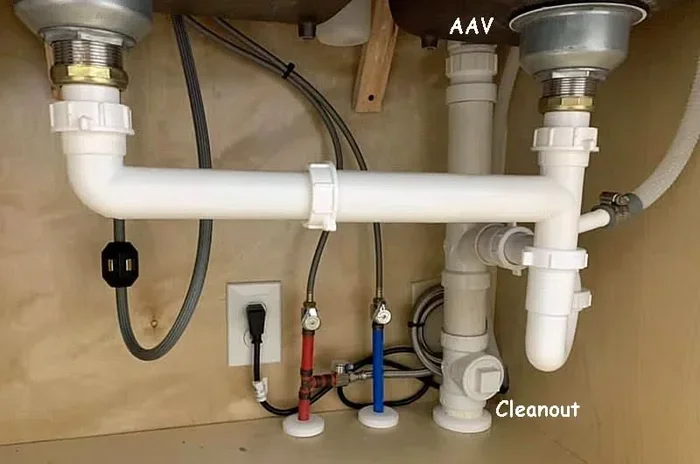
When you open the cabinet door beneath your kitchen sink, look straight down. The p trap hangs from the drain tailpiece on the sink and connects to a short pipe that goes into the wall. The curved section of the drain pipe is the most visible part.
The p trap is typically positioned about 12 to 18 inches below the sink basin. It connects to a waste pipe that runs through the wall or floor. In some kitchens, the p trap connects to a garbage disposal unit before reaching the wall pipe.
If you have ever looked under your sink and felt overwhelmed by the tangle of pipes, do not worry. The p trap is the largest and most curved piece. It usually has a chrome or plastic finish that stands out from the other pipe fittings. You cannot miss it once you know what to look for.
How to Identify the P Trap in Your Plumbing
Not sure which pipe is the p trap? Look for these signs. The pipe has a clear U-shaped or P-shaped curve. It is located between the sink drain and the wall outlet. There are slip nuts at both ends of the curved section.
The sink trap also has a cleanout plug at the bottom of the curved section. This plug allows you to remove debris without taking the entire trap apart. If your pipe has this feature, you have definitely found the right piece.
Some older homes may have an S-trap instead of a P-trap. However, modern plumbing codes require a p trap for all kitchen sinks. If you are unsure, look for the curved pipe under the sink and trace it from the drain to the wall connection.
Why the P Trap Is So Important for Your Kitchen
The p trap does much more than you might think. It is not just a piece of curved pipe. It serves several critical functions that keep your kitchen safe, clean, and odor-free.
Catching Debris and Preventing Clogs
Every time you wash dishes or rinse food scraps, small particles go down the drain. The p trap catches these bits of food, grease, and debris before they can travel deeper into your plumbing system. This prevents drain clogs that can cause water to back up into your sink.
Think of the p trap as a filter for your kitchen sink. It stops larger particles from reaching the main sewer line. Over time, the trap collects enough debris that you need to clean it out. This is why regular plumbing maintenance is so important.
If you notice your sink draining slowly, the p trap may be partially clogged. Clearing it out can often solve the problem without calling a plumber. A simple p trap cleaning can save you from a costly drain clog repair.
Maintaining the Water Seal Against Sewer Gas
The water seal inside the p trap is your first line of defense against sewer gas. This gas can contain harmful substances like methane and hydrogen sulfide. The last thing you want is for these odors to enter your cooking space.
The water seal works by holding a small amount of water in the curved section at all times. This water barrier blocks the gas from passing through. If a sink goes unused for a long time, the water in the p trap can evaporate, breaking the seal.
This is why it is a good idea to run water in unused sinks once a week. Keeping the water seal intact ensures your kitchen stays smelling fresh. A simple habit can prevent unpleasant odors and protect your home from harmful gases.
While you are in the kitchen working on your plumbing, you might also want to tackle other fun projects. If you love kitchen hacks, try making an egg in a bagel hole for a quick and satisfying breakfast while you wait for your sink to dry.
Common P Trap Problems You May Encounter
Even with regular care, p traps can develop problems over time. Knowing what to look for helps you catch issues early before they become expensive repairs.
Clogs and Blockages
The most common issue with a p trap is a clog. Food scraps, grease, soap scum, and small objects can all build up inside the curved pipe. When this happens, water drains slowly or not at all.
Signs of a clogged p trap include standing water in the sink, slow drainage, and gurgling sounds from the drain. If you notice these symptoms, it is time to inspect and clean the trap.
Most drain clogs can be cleared with a simple hand snake or by removing the trap and cleaning it by hand. Avoid using chemical drain cleaners, as they can damage the pipe fittings and seals over time.
Leaks and Loose Connections
Another common problem is leaks at the connection points. The slip nuts and washers can loosen over time, especially in older plumbing under sink setups. Water dripping from under the sink is a clear sign of a loose connection.
Check each pipe fitting for signs of moisture or corrosion. Tightening the slip nuts often fixes small leaks. If the washers are worn or cracked, replace them with new ones. These are inexpensive and available at any hardware store.
Sometimes the leak is not at the joints but in the curved section itself. Cracks or corrosion in the drain pipe may require replacing the entire sink trap. This is a straightforward job that most homeowners can handle with basic tools.
Common Mistakes That Cause P Trap Issues
Avoid these common mistakes to keep your p trap in great shape. Pouring grease down the drain is one of the biggest culprits. Grease solidifies inside the curve and traps other debris. Always dispose of cooking grease in a container and throw it in the trash.
Another mistake is ignoring small leaks. A tiny drip today can become a big problem tomorrow. Check your plumbing under sink regularly for any signs of moisture. Catching leaks early saves you from water damage and mold growth.
Frequently Asked Questions
What is where is the p trap in kitchen sink?
where is the p trap in kitchen sink is an important topic with many practical applications.